
Meet Clint
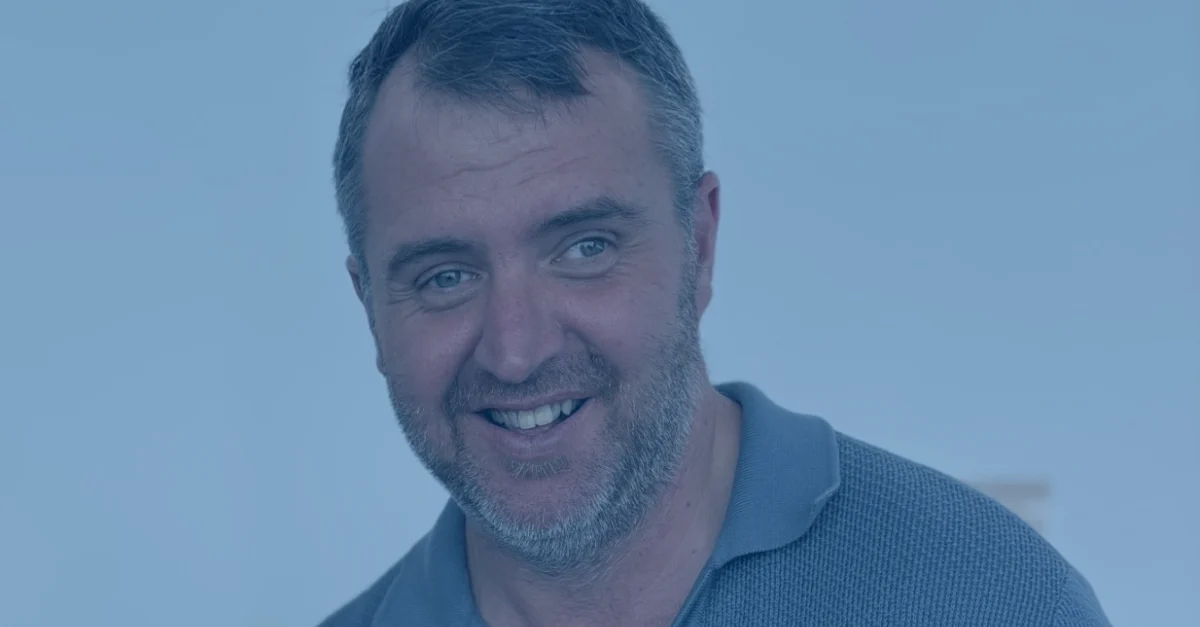
How Clint Supports People with TBI to Return to Work.
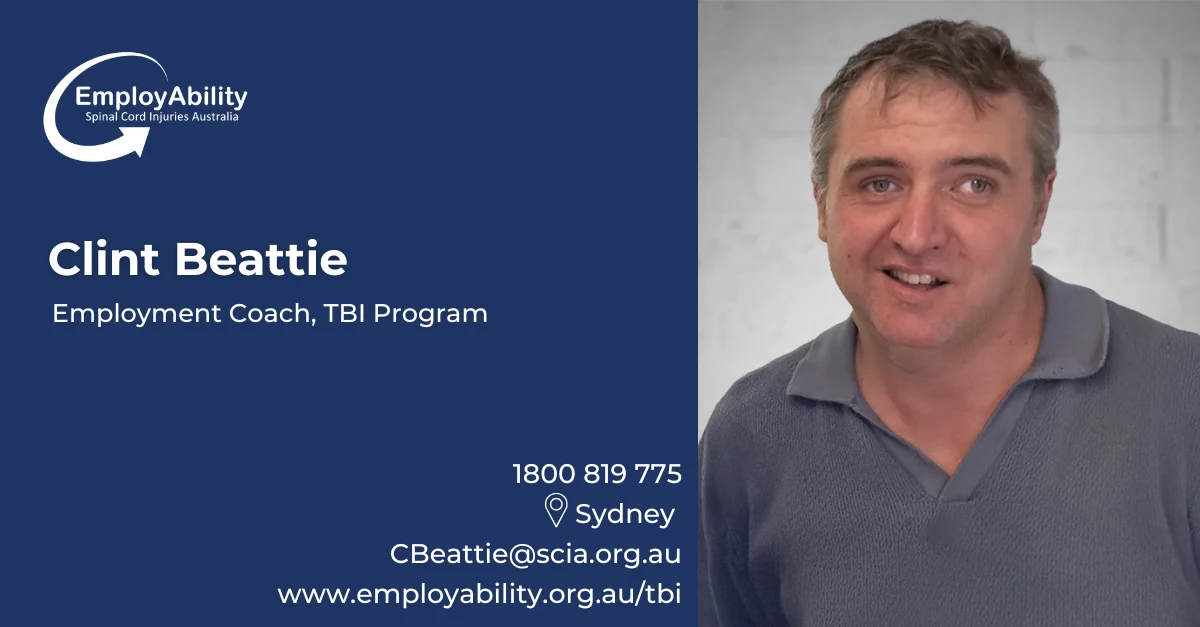
Clint Beattie is an Employment Coach and Mentor for EmployAbility’s Traumatic Brain Injury (TBI) Employment Program. Living with TBI himself, Clint brings powerful lived experience to his role, combined with a strong professional background in education across the TAFE and disability education sectors.
Towards the end of 2025, EmployAbility launched its much‑anticipated TBI Employment Program; a free initiative designed to support people with TBI to become work ready and feel confident about their employment journey. The program focuses on practical, transferable work and life skills, including résumé writing, interview preparation, workplace communication, and building self‑confidence. Clint plays a key role in shaping and delivering this program, ensuring it is practical, accessible, and grounded in real‑world experience.
Clint is deeply passionate about teaching and mentoring others. He understands first hand the challenges people with TBI can face when navigating employment systems, workplace expectations, and self‑belief. This insight allows him to connect genuinely with participants, creating a supportive environment where people feel safe to learn, ask questions, and see their potential.
Through his work, Clint is committed to creating meaningful, sustainable employment options for people of all abilities, through his lived experience disability employment coaching and practical employment skills for people with traumatic brain injury. He believes that confidence, understanding, and the right support can be truly life‑changing, and he takes pride in helping participants recognise their strengths and take positive steps toward their goals.
Always approachable and down‑to‑earth, Clint is known for his openness and willingness to share his experiences. And if there’s time for a chat, you might find him talking about one of his greatest passions outside of work, his mighty (his description, not ours ha-ha!!) Cronulla Sharks.
If you or someone you know is living with TBI and looking for employment support, get in touch with our team.
FAQ: Traumatic Brain Injury Employment Support & Coaching
1. What challenges do people with Traumatic Brain Injury (TBI) face when returning to work?
People with TBI may experience cognitive impacts such as reduced attention, memory difficulties, reasoning challenges, and slower problem‑solving. They may also face physical issues like fatigue, sleep problems, or coordination difficulties, as well as emotional and behavioural changes such as anxiety, irritability, and difficulty managing stress. These factors can affect finding, performing, and keeping a job.
2. How does vocational rehabilitation support people with TBI?
Vocational Rehabilitation (VR) programs help individuals with TBI develop job‑seeking skills, explore career options, receive training, and access job coaching. VR counsellors assist with job placement, workplace accommodations, and ongoing support to help individuals return to, find, and maintain employment.
3. What is supported employment for people with brain injury?
Supported employment provides long‑term, personalised assistance such as job coaching, on‑the‑job training, and collaboration with employers or long‑term support providers. It is especially helpful for people who require more intensive ongoing support to enter or re‑enter the workforce.
4. What kinds of workplace accommodations can help someone with a TBI succeed at work?
Accommodations may include flexible schedules, gradual return‑to‑work plans, additional rest breaks, cognitive aids, assistive technology, and structured communication strategies. Health professionals may also recommend adjustments that support endurance, concentration, or reduced sensory overload.
5. How do job coaches support people with disabilities or TBI?
Job coaches help individuals learn job duties, develop organisational strategies, adapt to workplace expectations, and build confidence. They also support employers by explaining accommodations, reinforcing training, and helping create inclusive workplaces. Job coaching is often considered a reasonable accommodation itself.
6. What practical employment skills are most beneficial for people with TBI?
Skills such as résumé writing, interview preparation, workplace communication, and job‑specific training can significantly improve employment outcomes. Strength‑based and user‑friendly resources, like those found in TBI employment toolkits, help build self‑management and self‑advocacy skills in the workplace.
7. What factors improve employment success for people with brain injury?
Research shows success is more likely when support includes early VR involvement, cognitive skills training, assistive technology, a supportive work environment, and structured on‑the‑job training. These elements help individuals enter and remain in employment more effectively.
8. How does lived experience improve the effectiveness of employment coaching?
Employment coaches with lived experience of TBI can relate closely to the challenges participants face. This builds trust, strengthens communication, and creates a supportive environment that helps individuals feel safe to learn, ask questions, and build confidence, key components of successful employment outcomes. (Supported by broader evidence on job coaching effectiveness and lived experience approaches.)
Related Articles
Read our other latest blog posts.
View All
Our DisAbility Glossary

DCA: Workers With Disability Still Experiencing High Levels of Workplace Discrimination: Why Inclusion Must Be Embedded, Not Optional

Work place accommodation tips & tools