Driving Inclusion in Transport
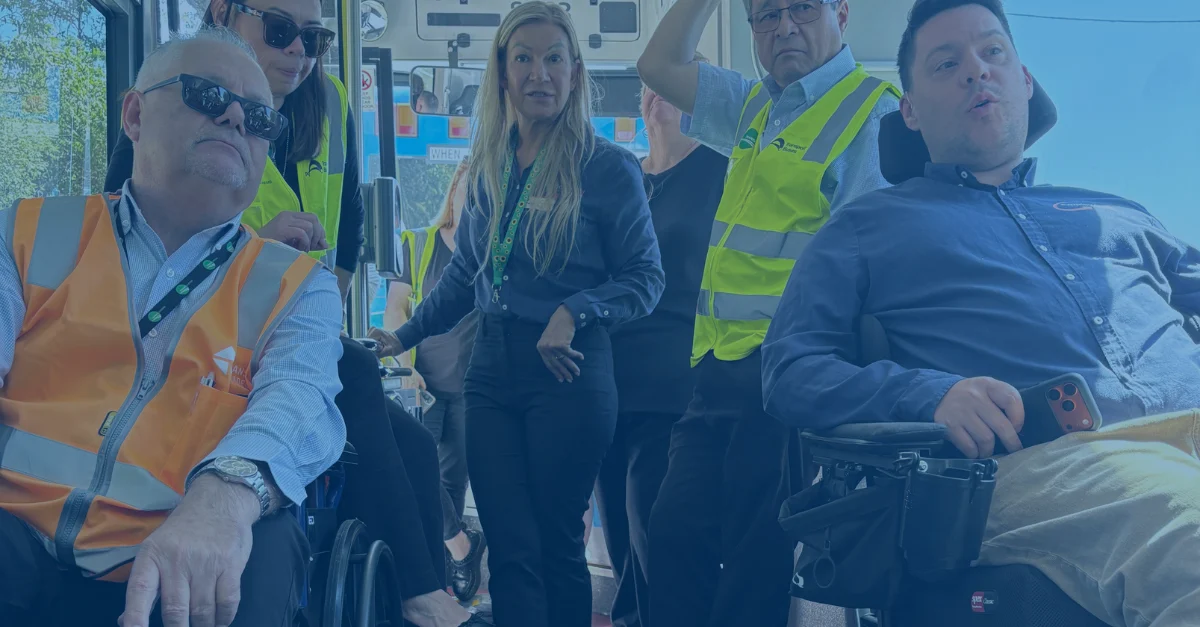
Public transport is the backbone of our communities, connecting people to work, education, and essential services. But for many Australians with disability, these journeys remain challenging. According to Australia’s Disability Strategy, only 63% of people with disability can use all forms of public transport without difficulty, and this figure has barely improved in recent years. It is as low at 53% in the Northern Territory.
The Push for Accessible Public Transport in NSW
The NSW Government is taking significant steps to change this. Through its Safe Accessible Transport (SAT) program, more than $800 million has been allocated to upgrade transport interchanges, stations, and wharves to meet the Disability Standards for Accessible Public Transport (DSAPT). An additional $40 million was announced in the 2025–26 State Budget for accessibility upgrades.
This investment is part of a broader commitment outlined in the NSW Disability Inclusion Plan, which includes over $800 million for accessible public transport and $5 billion for accessible housing, the largest investment of its kind in NSW history.
“The Minns Labor Government is celebrating the 2025 International Day of People with Disability with a commitment to build a better, more inclusive and accessible NSW,” said Minister for Disability Inclusion Kate Washington. “When one in five people in NSW have a disability, we must ensure we’re removing any barriers to accessing our government’s services.” The NSW Disability Inclusion Plan 2026–2029 is a clear guide for NSW on its approaches to better the community. It focuses on supporting over 1.5 million people with disabilities in the state. The strategy also builds on NSW’s past efforts, such as investing $800 million in safer, more accessible public transport; more than $5 billion in fully accessible social housing, a significant direct investment in accessible housing in NSW’s history; and an additional 260 support classes in public schools.”
Bus Accessibility is a Critical Piece of the Puzzle
While rail and light rail upgrades often make headlines, accessible bus services are equally vital. Operators like Transit Systems have introduced features such as:
- Wheelchair-accessible buses with automatic ramps and kerbside kneeling technology
- Priority seating areas for passengers with mobility needs
- Compliance with national mobility aid specifications to ensure safe boarding
These improvements make a real difference, but infrastructure alone isn’t enough. Staff confidence and disability awareness training are essential to ensure inclusive journeys.
Our Recent Workshop at Leichhardt
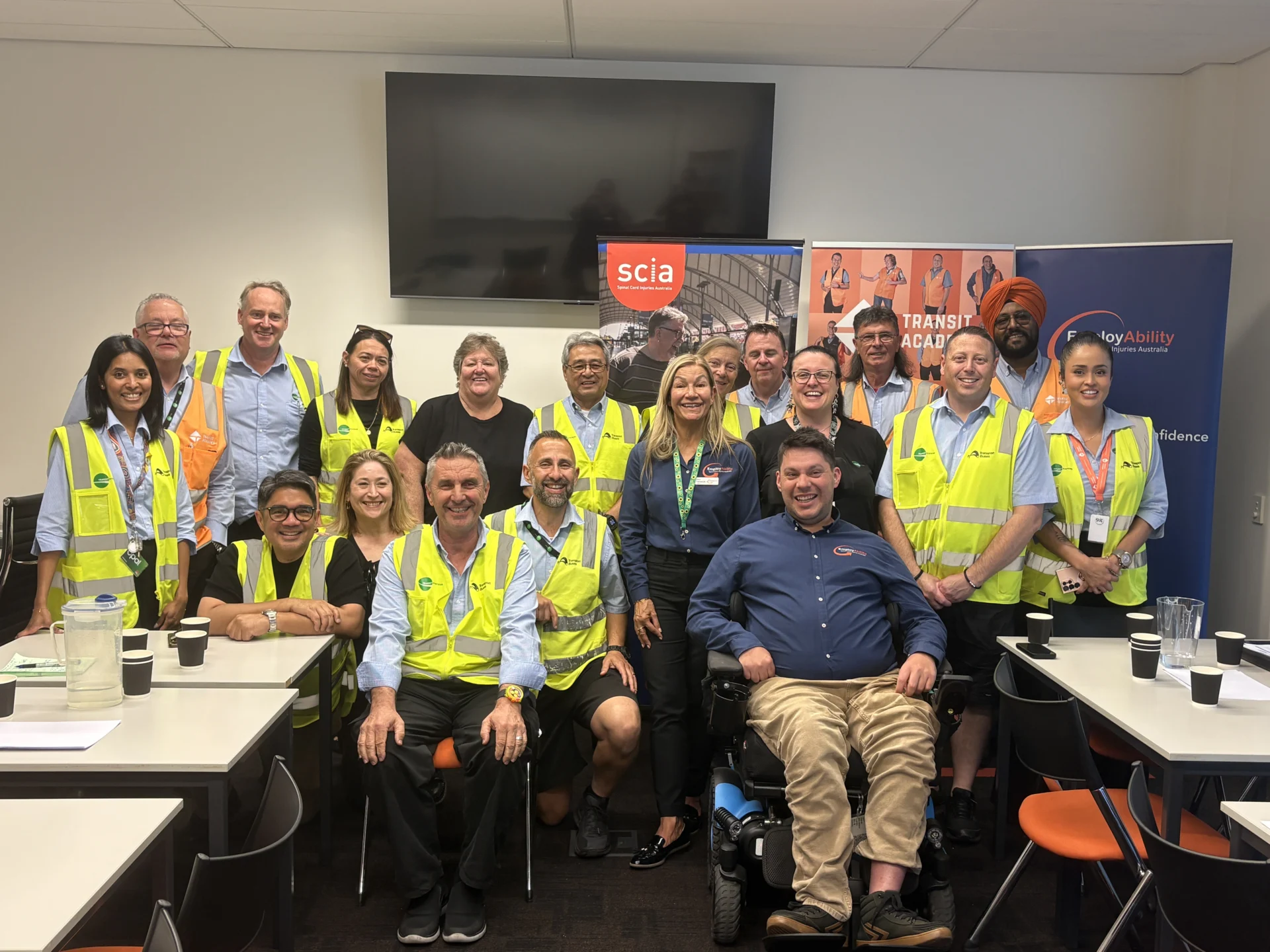
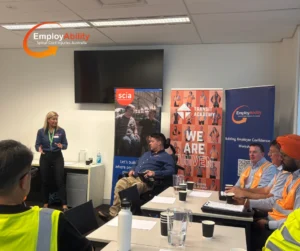
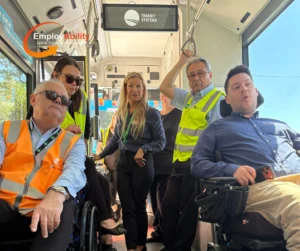
At Transit Systems’ Leichhardt depot, EmployAbility delivered one of our famous BEC workshops with a twist! In the room sat Bus drivers, Trainers, Recruiters, People & Culture staff and dept Managers.
We combined real-world scenarios with lived experience and hands-on insights.
We offered their staff a chance to enter and exit the bus on a manual wheelchair with surprising results! Many of the staff simply could not wheel themselves up the automatic ramp without assistance! They also discovered that contrary to popular opinion, the provided seat belts where a challenge to utilise and that the problematic location of the stop buzzer.
Hands-on insights with real world impacts!
The result? Staff walked away with practical tools and a deeper understanding of how accessibility impacts every journey.
“The training was a real eye-opener” said Transit Systems NSW Customer Service Team Leaser Kaz Corsham, “Experiencing the challenges firsthand gave us a deeper understanding of what accessibility truly means”.
During the session we focussed on:
- Understand barriers faced by people with disability
- Provided hands-on Wheelchair experience when getting on and off a bus
- Build practical strategies for inclusive customer service including language
- Foster a workplace culture where accessibility is everyone’s responsibility
What we learnt from our end was:
- Drivers need more training on understanding the needs of PWD
- They worry about upsetting rather than focussing on assisting which often leads to no help being offered at all.
- That we can offer greater understanding by working together on a more regular basis.
- Greater understand is needed around using of the seatbelt.
- The Inner West offers an ‘On demand’ bus that can be booked via an app, though only fits one wheelchair.
Thank you to all the wonderful staff who were so open and involved in our training session. Your questions, passion and commitment to make the bus systems more disability friendly was inspiring.
Why Disability Inclusion Training for Bus Operators Matters
EmployAbility’s Building Employer Confidence training and lived experience-led workshops help transport operators:
- Understand barriers faced by people with disability
- Learn practical strategies for inclusive customer service
- Build a workplace culture where accessibility is everyone’s responsibility
Training programs like these are proven to:
- Improve passenger experience and compliance with DSAPT reforms
- Reduce discrimination and enhance safety
- Boost brand reputation and community trust
The Future of Disability Transport in NSW
With the NSW Government’s record investment and reforms to the DSAPT, the future of transport is inclusive. But achieving true accessibility requires collaboration between government, operators, and training providers.
Every bus, train, and ferry should offer safe, equitable, and welcoming journeys for all passengers.
Ready to lead the way in accessible transport?
Explore our tailored disability inclusion training programs and lived experience workshops that turn policy into practice. Contact us today to learn more.
References:
Related Articles
Read our other latest blog posts.
View All
Our DisAbility Glossary

DCA: Workers With Disability Still Experiencing High Levels of Workplace Discrimination: Why Inclusion Must Be Embedded, Not Optional

Work place accommodation tips & tools